What due diligence can't see
Commercial due diligence covers a lot of ground. The Market Verdict™ adds one focused lens: the role customers give the brand, read from their behavior over time.
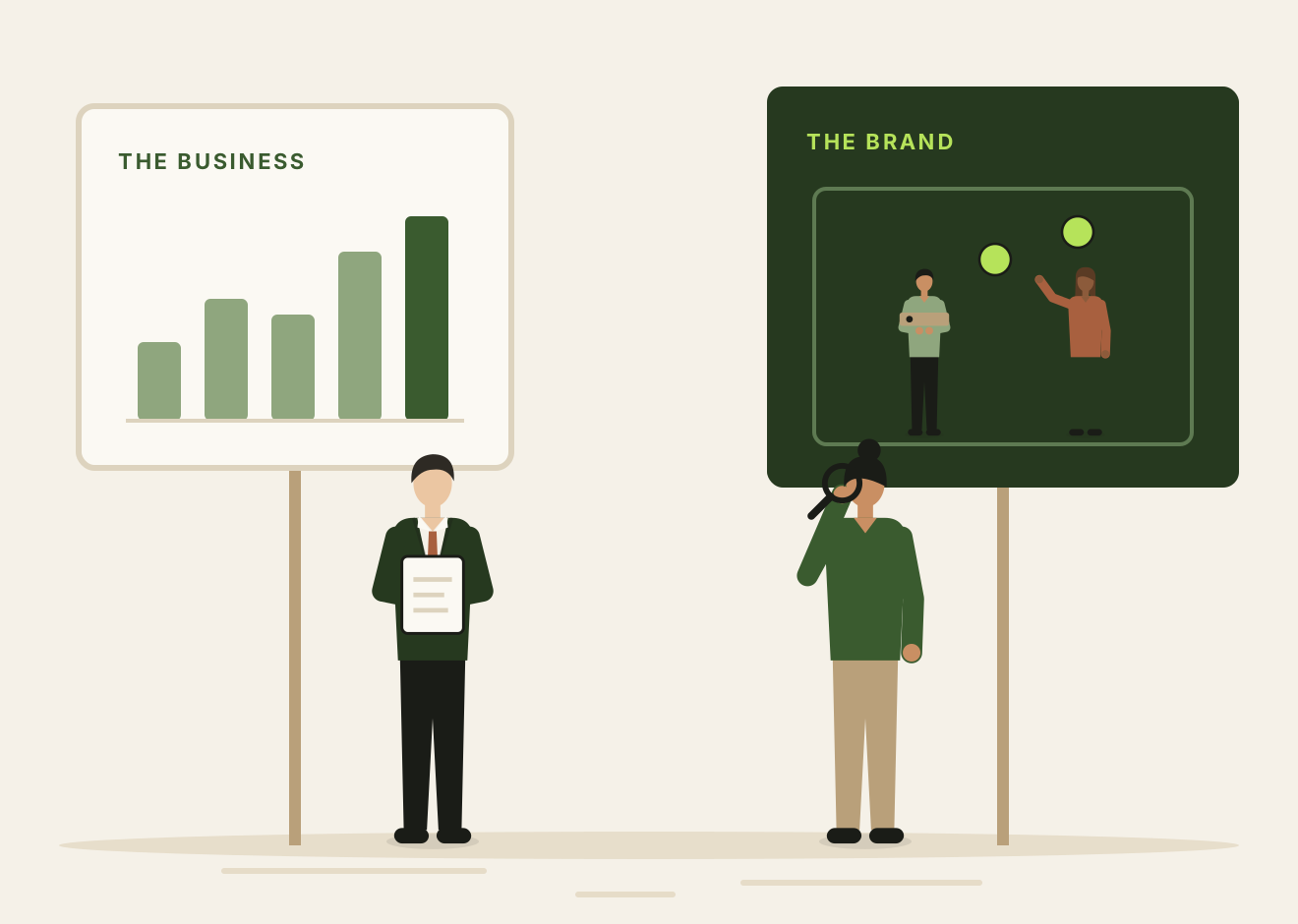
Commercial due diligence answers an important question: is this business commercially viable? Is the market big enough, the position defensible, the growth plan believable? Good diligence teams answer it well, usually in a few weeks inside a deal.
We add a narrower, focused question: what has the market already decided this brand is for, and is the company still protecting it?
Diligence teams can and do look at customers and positioning, often through interviews and surveys inside a short deal timeline. Our read is an additional lens, not a replacement, and the two questions can have different answers. A business can look commercially sound at entry while it slowly spends its way out of the one thing customers come back for.
Consider Guitar Center. Bain Capital bought it in 2007, for about $2.1 billion including debt. Ares Management took control in 2014. In November 2020 the company filed for Chapter 11, and lenders agreed to cut around $800 million of debt. Heavy debt and a pandemic were plainly part of that story. What the public record can't tell us is how much was the brand. That is the kind of question a focused read can add to: whether expert, hands-on help in the store is why musicians choose it over buying online, read from years of public customer behavior, and whether later decisions protected that or trimmed it.
| Commercial due diligence | The Market Verdict | |
|---|---|---|
| The question | Is the business commercially viable? | What role has the market given this brand, and is it being protected? |
| Main evidence | Market data, financials, expert and customer interviews | Public customer behavior over time: reviews, forums, complaints, switching, and how the company's own claims changed |
| What you get | Market size, competitive position, unit economics, a view on the investment case | The Real Brand, the one thing not to compromise, where the company is drifting, and a dated prediction |
| Typical limits | Time-boxed inside a deal; customer views often gathered through interviews and surveys | Doesn't size markets, model revenue or value a deal |
Use it alongside diligence, not instead of it. When they agree, you can be more confident. When they disagree, that disagreement is the most useful finding of all: it tells you where to look before you sign.
The full paper for investors and deal teams is free to download: What due diligence can't see (PDF).
Sources: Guitar Center, ownership and Chapter 11 history · Rolling Stone, "What Does the Guitar Center Bankruptcy Mean?"