What counts as real evidence about your customers
Four checks to run before you trust anything you’ve heard about your customers.
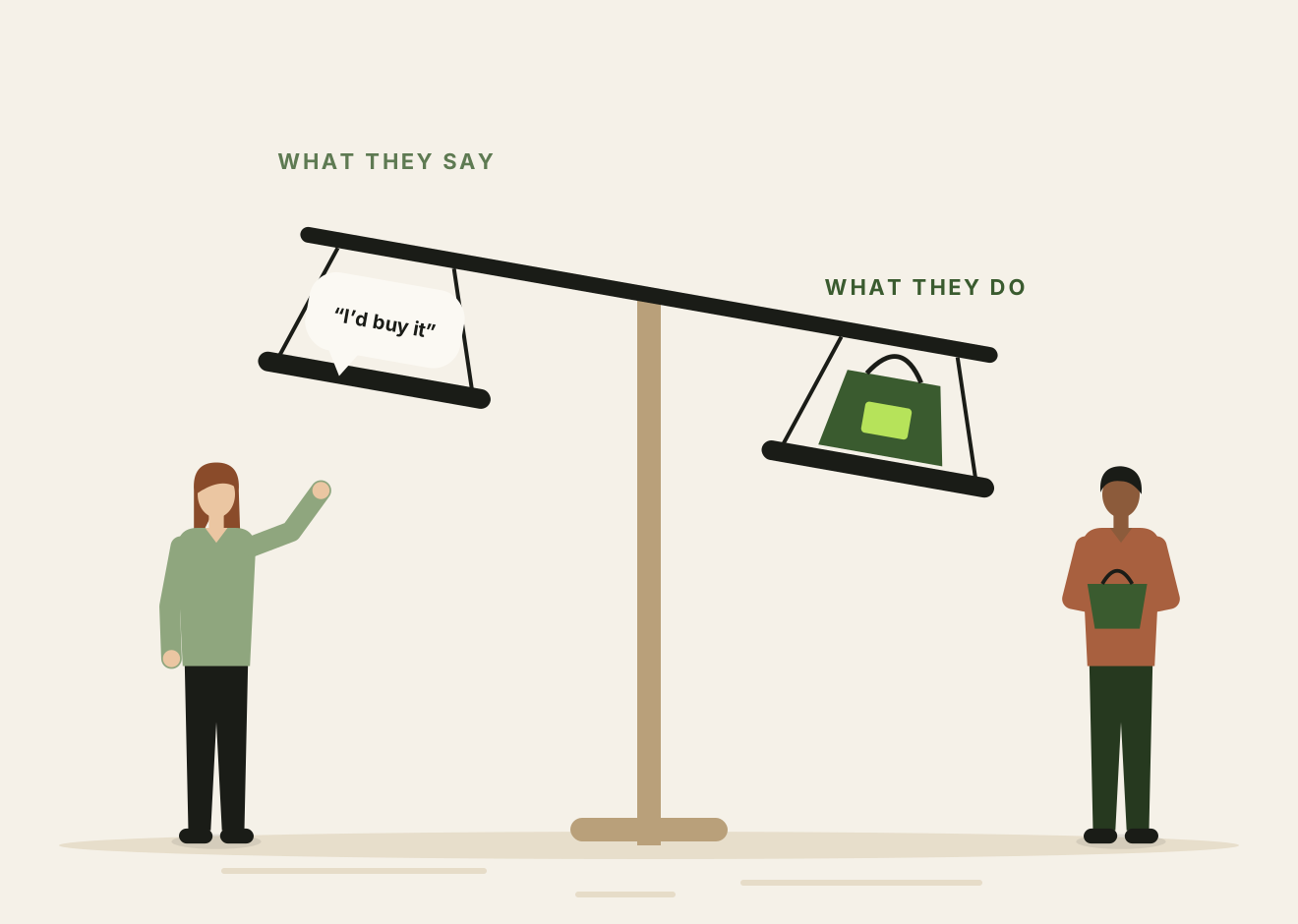
Not all customer evidence is equal. Here are four checks before you treat a behavior as a reliable pattern.
Is it repeated? Independent customers or sources show the behavior. One enthusiastic email is a story; the same behavior from independent customers or sources starts to look like a pattern.
Is it consistent? The same specific behavior is observed, described clearly enough that someone else would recognize it.
Did it cost them something? Customers commit money, meaningful time, effort, or switching cost. Asking for a feature is interest. Paying for it is commitment.
Does it last? Records show the behavior persisting over a period relevant to it, not necessarily months. A weekly habit and a yearly renewal need different windows. Either way, a spike after a promotion is not a pattern.
Two traps catch almost everyone. First, more sources isn't the same as independent sources. Several numbers about the same customers count as one source, and the same review copied across five websites is one voice, not five. Second, an interview can tell you a lot about what people think, but it can't prove what role you play for them. Only what they do can.
If a belief can't pass these four checks, it isn't wrong. It's just not tested yet. That's a perfectly honest place to be.